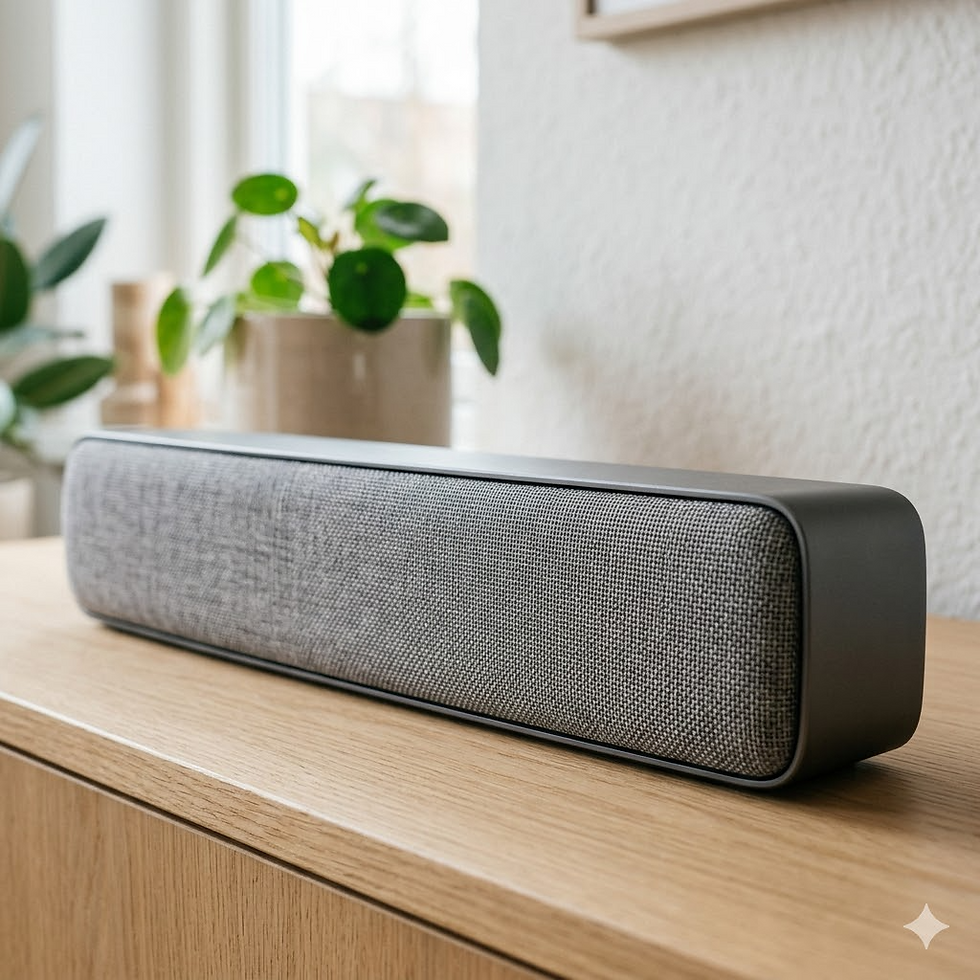
How to Choose the Right Speaker Fabric for Your Product
- luyingan
- Jun 2
- 1 min read
Updated: Jun 18

Sourcing speaker fabric for the first time — or evaluating a new supplier — can be overwhelming. But five specifications determine whether a fabric will perform well in your application.
1. Airflow Rating
Airflow (mm/s/Pa) is the single most important acoustic specification. It tells you how freely sound passes through the fabric. Request this number from any supplier. If they can't provide it, that's a red flag.
2. GSM (Weight)
Lighter fabrics are more acoustically transparent; heavier fabrics are more durable. Match GSM to your use case — a portable outdoor speaker needs a very different GSM profile than a high-fidelity home speaker.
3. Thickness
Thickness affects both acoustics and mechanical fit. Always confirm thickness tolerance with your supplier, not just the nominal value.
4. Material Composition
Polyester is the most common material for speaker fabric due to its stability and acoustic consistency. Some applications call for nylon blends, cotton blends, or recycled fiber content for sustainability compliance.
5. Snagging Resistance
For any speaker that will be handled — portable, wearable, or in high-traffic areas — snagging resistance matters. RC Textile tests and rates our fabrics for snagging so you can specify the right protection level.
Request a Sample
Specifications on paper are a starting point — acoustic performance depends on how a fabric interacts with your specific enclosure design. Contact RC Textile at service@rctex.com.tw to request samples for your next project.