
From a Taiwan Mill to the World's Speaker Grilles: RC Textile's Sustainability Story
- luyingan
- Jun 19
- 3 min read
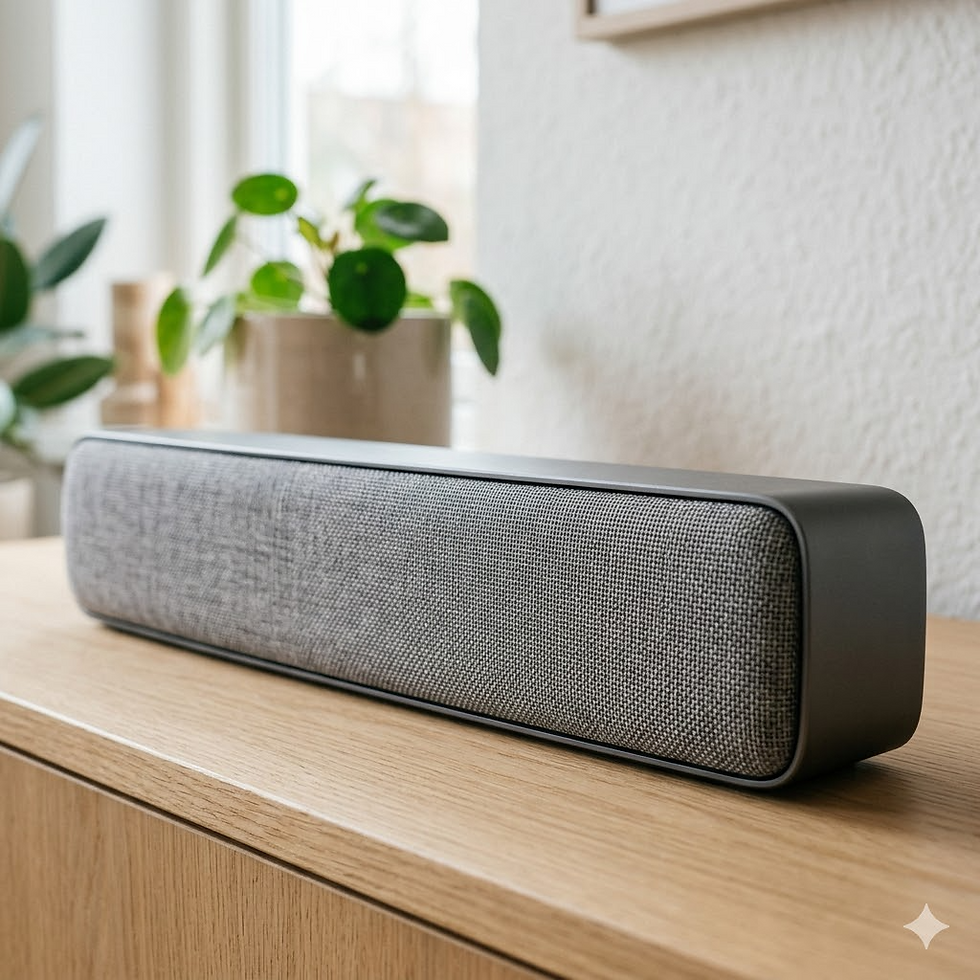
Speaker fabric doesn't usually get a backstory. It sits behind the grille, does its acoustic job, and disappears into the rest of the product. But the story of where that fabric comes from — and what it's made of — is becoming a real factor in how audio brands choose suppliers. At RC Textile, that story starts in 1969 and runs through every recycled PET yarn we weave today.
Fifty-Six Years of Texture and Tone
RC Textile has operated out of Taiwan since 1969, long before "sustainable sourcing" was a line item in a procurement brief. Over five decades, we've supplied speaker and audio fabric to brands including Sony, Bose, Samsung, Sonos, and Harman — work that required consistent quality across enormous production runs, not just a good story. That track record matters now for a specific reason: sustainability commitments only mean something if the manufacturer behind them can actually deliver fabric that performs, batch after batch, at the volumes global audio brands need.
Why Recycled PET Belongs in Speaker Fabric
Recycled PET fabric starts as post-consumer plastic bottles, which are cleaned, broken down, and re-spun into polyester yarn. That yarn is then woven or knitted into the same kinds of acoustic textiles used in conventional speaker grilles — the difference is in the raw material's origin, not in the manufacturing discipline applied to weave density, color consistency, or finish.
For audio product teams, this matters in a practical sense, not just a marketing one. Speaker grille fabric is often a visible, touchable part of a product's design, and recycled content doesn't have to mean a visible compromise in hand-feel or color depth. We treat recycled PET fabric as a parallel product line within our broader catalog (see rctex.com/recycled-pet) — built and tested with the same rigor as our other constructions, not positioned as a lower-tier alternative.
What "Sustainable" Actually Means for Procurement
Sustainability claims in textiles can be vague, and procurement teams are right to ask for specifics rather than taking a label at face value. A few questions worth asking any fabric supplier:
Where does the recycled content actually originate, and how is that traced through the supply chain? What does the finishing process look like, and does it add chemicals back into a fabric marketed as eco-conscious? Can the supplier produce recycled fabric at the volumes and lead times a real product launch requires, or is it a boutique offering that can't scale?
These are the same questions we expect our own customers to ask us. RC Textile's approach to sustainability — covered in more depth on our rctex.com/rc-and-sustainability and rctex.com/eco-friendly pages — is built around being able to answer them directly, rather than around a single certification or buzzword.
Built on Trust, Built to Last
A textile manufacturer that's been operating since 1969 has had to earn renewals from major audio brands one production cycle at a time. That's a different kind of credibility than a sustainability claim made in isolation. When recycled PET fabric carries RC Textile's name, it carries the same expectations our longtime clients have held us to for decades: consistent hand-feel, reliable color matching, and fabric that performs the same way on yard 1,000 as it did on yard one.
If your team is evaluating recycled or eco-conscious options for an upcoming speaker or audio product, we're glad to walk through what's possible — including sample yardage so you can test hand-feel and acoustic performance before committing to a production run. Visit rctex.com to see our recycled PET and sustainability pages, or reach out directly to start a conversation about your specs.


