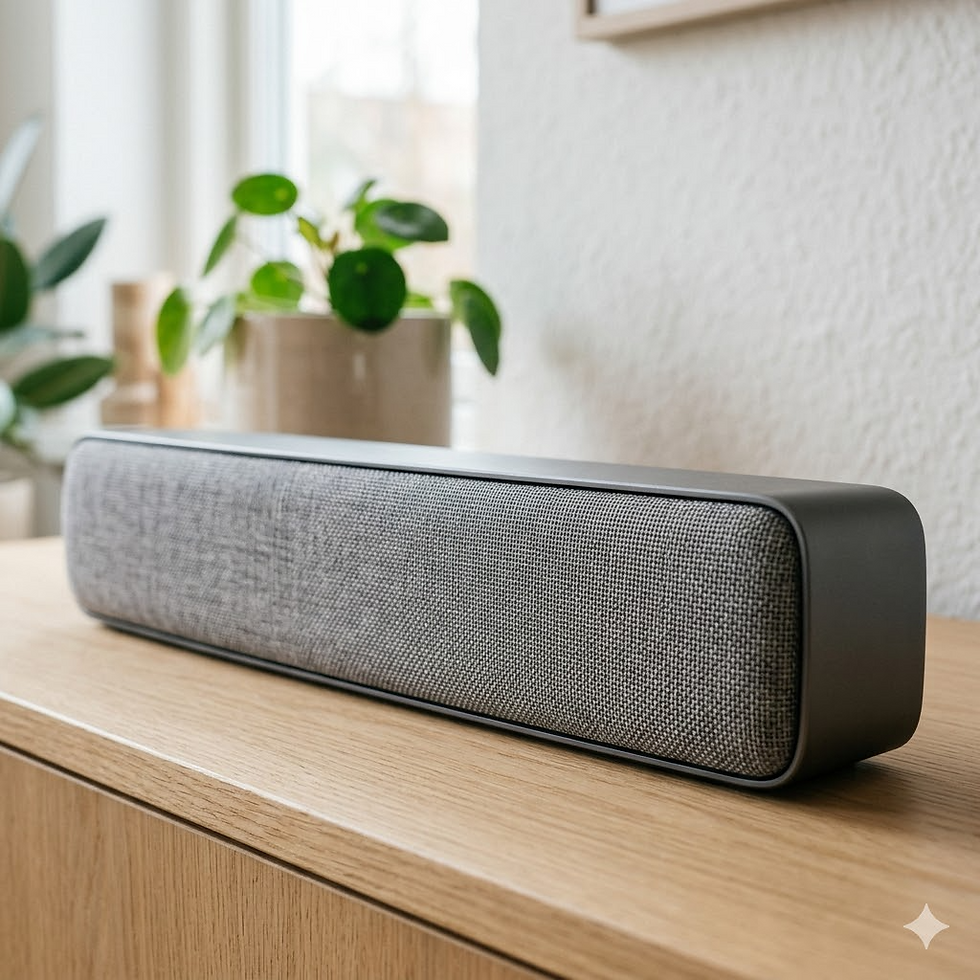
How Speaker Fabric Affects Sound Quality
- luyingan
- Jun 2
- 1 min read
Updated: Jun 18
When most people think about speaker performance, they focus on drivers, amplifiers, and crossovers. But the fabric covering the speaker grille plays a surprisingly significant role in what actually reaches your ears.
What Is Acoustic Transparency?
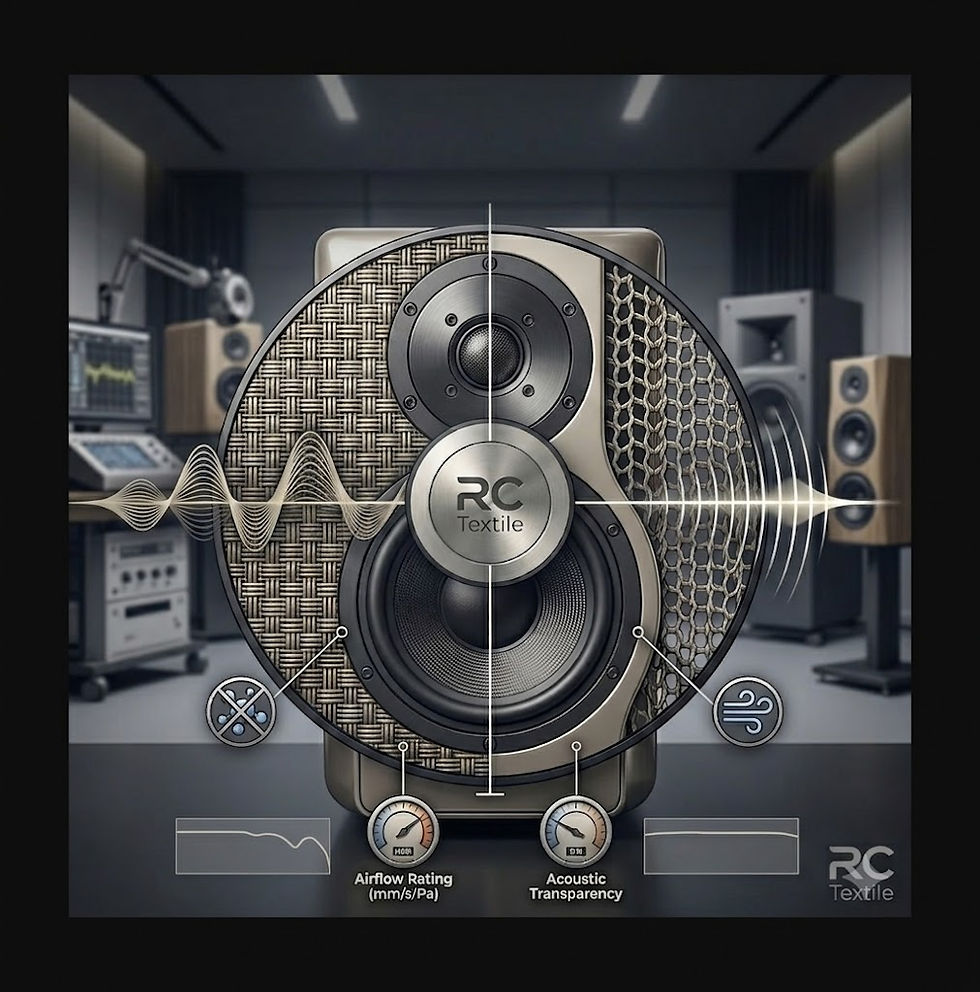
Acoustic transparency refers to how freely sound waves pass through a fabric without being absorbed, reflected, or distorted. A fabric with high acoustic transparency lets sound through with minimal interference — critical for maintaining the frequency response your speaker engineers designed for.
The Role of Airflow
Airflow rating (measured in mm/s/Pa) is the most direct indicator of acoustic transparency. At RC Textile, every fabric in our catalog is tested for airflow alongside thickness and weight. Higher airflow generally means less sound attenuation, especially in the upper mid and high frequencies.
Weave Density and Frequency Response
Tightly woven fabrics tend to block higher frequencies more than loosely woven or knitted structures. This is why many premium speaker brands choose open-weave or knitted grille fabrics — they preserve treble detail while still protecting the driver underneath.
Material Composition Matters
Polyester and nylon blends are the most common materials in speaker fabric due to their dimensional stability and resistance to sagging over time. At RC Textile, we engineer fabrics specifically for the acoustic demands of speaker products — not repurposed textile materials. The key specs to request: airflow rating, GSM, thickness, and material composition.